
Every October, Health Literacy Month shines a spotlight on one of the most important yet overlooked aspects of health: the ability to understand and act on health information. For aging adults, this skill isn’t just a convenience—it’s a lifeline.
Strong health literacy helps older adults manage medications, make informed decisions about care, prevent avoidable hospital visits, and maintain their independence. Without it, daily life becomes more complicated, risks rise, and loved ones shoulder a heavier burden.
At Live 2 B Healthy®, we believe that wellness starts with understanding—and that movement can be one of the most powerful tools for learning and connection. This blog explores why health literacy is so vital for aging adults, how families and caregivers can help, and how programs like Live 2 B Healthy make a difference.
The Current Landscape: What the Numbers Say
The Centers for Disease Control and Prevention (CDC) has found that many older adults face challenges when it comes to health information. (CDC Health Literacy)
- -71% of adults over age 60 have difficulty using printed health materials like brochures or pill bottle instructions.
- -80% struggle with forms or charts (insurance forms, medical history, nutrition guides).
- -68% find interpreting numbers and calculations difficult (dosages, blood pressure readings, lab results).
These challenges aren’t minor—they can lead to skipped medications, misunderstood instructions, unnecessary hospital visits, and a reduced quality of life. With the senior population expected to reach 71.5 million by 2030, the need for clear, accessible health communication will only grow.
The Benefits of Strong Health Literacy for Aging Adults
Improving health literacy offers real-world benefits for seniors and their families:
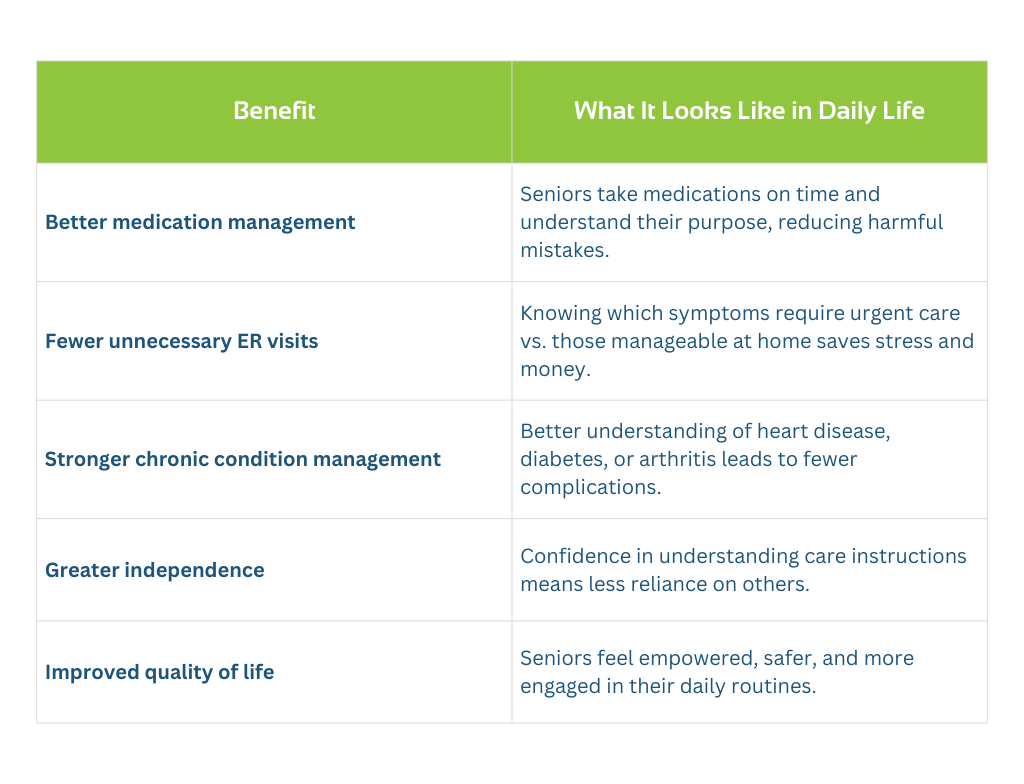
Research shows that low health literacy is linked to higher healthcare costs, poorer health outcomes, and less use of preventive care like screenings and vaccinations. On the other hand, clear, supportive communication can change lives.
Barriers Aging Adults Face
Why do so many older adults struggle with health information? The reasons vary, but common challenges include:
-
- -Vision, hearing, or cognitive changes that make it harder to read, hear, or remember instructions.
-
- -Complex health systems with small print, technical jargon, or confusing paperwork.
-
- -Confidence gaps, where seniors hesitate to ask questions or admit they don’t understand.
-
- -Misinformation online, where it’s difficult to separate fact from fiction.
Understanding these barriers helps families, communities, and organizations like Live 2 B Healthy® design solutions that work.
What Loved Ones and Caregivers Can Do
Families and caregivers play a vital role in bridging the gap. Here are practical steps anyone can take:
-
- Use plain language and visuals. Replace medical jargon with everyday words, use larger fonts, and add visual aids like icons or color coding.
-
- Encourage questions. Remind loved ones it’s okay to say, “I don’t understand.” Create a safe, open dialogue.
-
- Practice “teach-back.” After explaining something, ask the older adult to repeat it in their own words. This confirms understanding.
-
- Offer multiple formats. Some seniors learn best by hearing, others by seeing. Combine written instructions with demonstrations or videos.
-
- Simplify the environment. Use good lighting, large-print forms, and remove background distractions when reviewing information.
-
- Prepare for appointments. Write down questions ahead of time and bring a trusted support person along.
-
- Stay alert to misinformation. Help evaluate whether information comes from a credible, evidence-based source.
These small steps add up, giving seniors the tools and confidence to manage their health more effectively.
Movement as a Path to Understanding
Health literacy isn’t just about reading materials—it’s also about making sense of the body, health routines, and preventive strategies. That’s where Live 2 B Healthy® steps in.
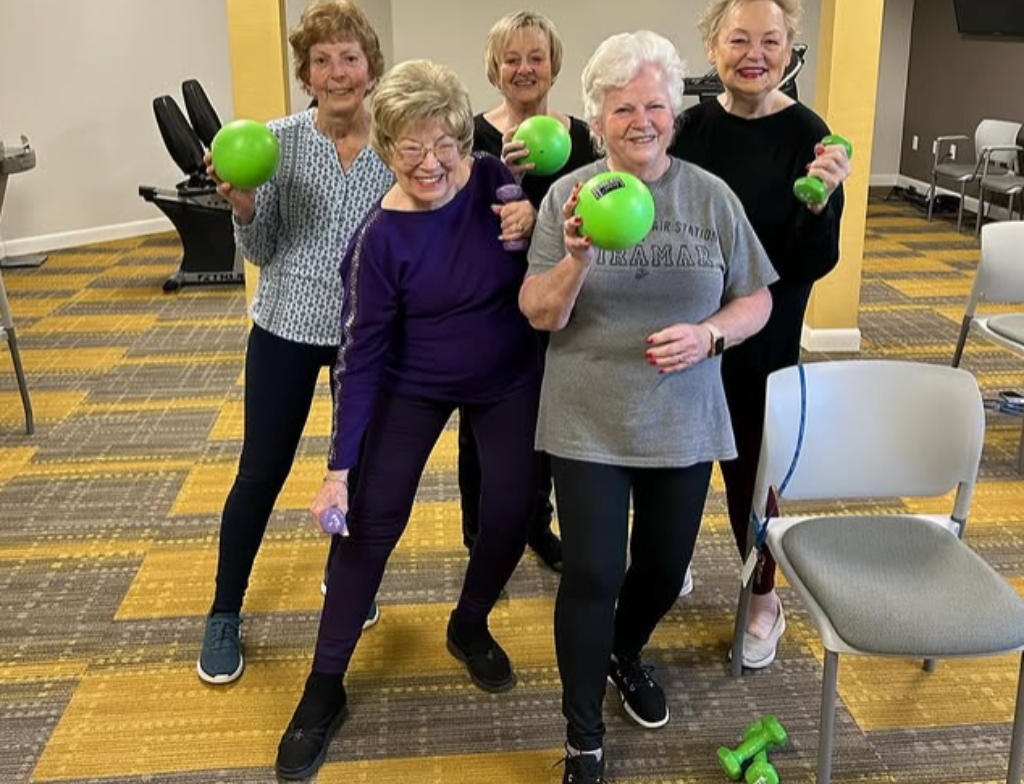
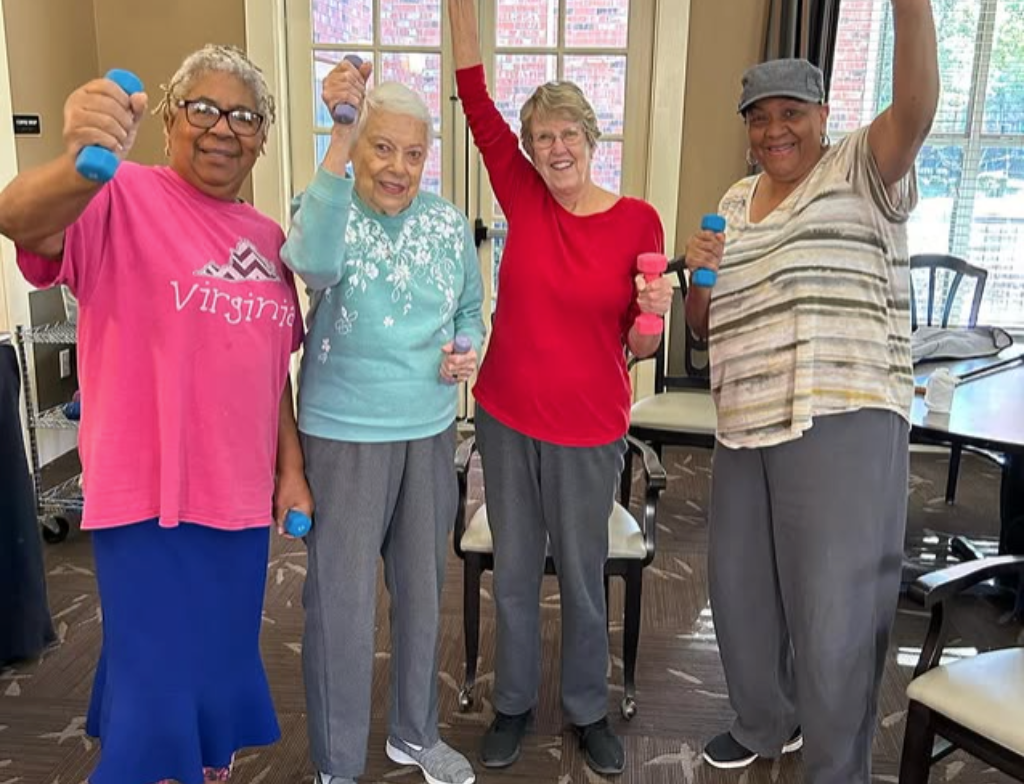
In every class, certified trainers explain not only how to do the exercises, but why they matter. Seniors learn that strengthening leg muscles improves balance, stretching helps prevent falls, and movement supports heart and brain health.
Because classes are interactive, seniors have the opportunity to ask questions in real time, see demonstrations, and practice safely in a supportive group setting. This combination of physical activity and simple, practical education makes health concepts easier to grasp—and remember.
In fact, many participants share that they “can really see the benefits” as their balance improves and daily tasks feel easier. These aren’t abstract lessons; they’re lived experiences.

Building a Culture of Wellness in Communities
For senior living communities and assisted living directors, Health Literacy Month is an opportunity to create an environment where education and wellness go hand in hand.
Perhaps consider hosting a “Fitness & Facts” workshop, where a Live 2 B Healthy class is paired with a short health-literacy discussion, which can spark meaningful engagement. Residents walk away not only with stronger muscles, but also with clearer knowledge about why health routines matter.
Why Health Literacy Month Matters Right Now
October’s Health Literacy Month is the perfect reminder that seniors deserve health information they can understand and use. But the work doesn’t stop at the end of the month. Every day offers opportunities to make wellness more accessible.
By weaving clear communication into fitness programs, newsletters, family conversations, and community events, we can ensure that seniors are not left behind in an increasingly complex healthcare system.
Key Takeaways:
-
- -71% of adults over 60 struggle with print health materials.
-
- -80% struggle with forms or charts, and 68% struggle with numbers.
-
- -Low health literacy leads to higher costs, more hospital visits, and lower quality of life.
-
- -Families can help by simplifying communication, encouraging questions, and confirming understanding.
-
- -Live 2 B Healthy provides a natural bridge between movement and understanding, reinforcing key health concepts through fitness.
Closing Thought
Health Literacy Month isn’t only about forms and paperwork, it’s about giving older adults the confidence and clarity to live well. When seniors understand their health, they can take meaningful steps toward independence, safety, and joy.
With the right support from loved ones, communities, and partners like Live 2 B Healthy®, every older adult has the chance to thrive—not just in October, but all year long.
Ready to increase fitness through wellness and literacy in your community? Contact Live 2 B Healthy today and discover why we are the gold standard in Senior Fitness.